SEO and GEO in the AI Search Era: What MarketAny Should Do Now
A practical MarketAny guide to SEO, Generative Engine Optimization, and how to build content that works for humans, crawlers, and AI answer engines.
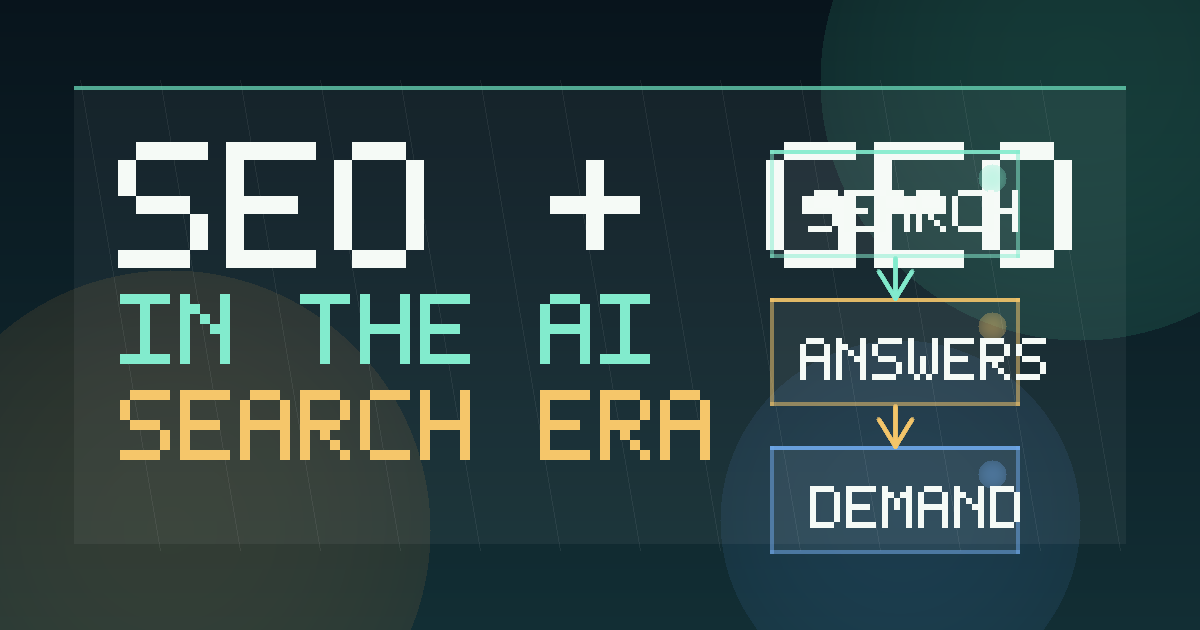
SEO and GEO in the AI Search Era
Search is no longer only a list of blue links. Buyers still use Google, but they also ask ChatGPT, Perplexity, Claude, Gemini, YouTube, TikTok, Reddit, and the AI summaries built into search results. That changes the job. We still need SEO, but we also need GEO: Generative Engine Optimization.
For MarketAny, the opportunity is direct. We help teams turn websites, prompts, and campaign ideas into short marketing videos. That means our content strategy should not only rank. It should be easy for AI systems to understand, cite, summarize, and transform into visual assets.
SEO is still the foundation
SEO is still about useful pages, fast technical delivery, clean structure, good titles, strong internal links, and content that satisfies the intent behind a query. The difference is that search engines increasingly answer the question before the click. If the page is thin, generic, or hard to parse, it may be ignored by both traditional crawlers and AI answer engines.
MarketAny should keep doing the fundamentals well:
- Publish pages that answer specific problems marketers actually search for.
- Use descriptive titles, excerpts, headings, canonical URLs, and schema.
- Keep every public article server-rendered so crawlers receive real content immediately.
- Add original images, examples, screenshots, and video assets instead of generic text-only posts.
- Build internal links from product pages, guides, categories, and comparison content.
GEO means making content answerable
GEO is the practice of making content easy for generative systems to retrieve, trust, and reuse in answers. The goal is not to trick AI. The goal is to make our expertise explicit enough that answer engines can confidently include it.
That means every strong article should include clear definitions, concise summaries, product-specific workflows, evidence, examples, and structured metadata. A GEO-ready page should make it obvious who the content is for, what problem it solves, what steps to take, and why the recommendation is credible.
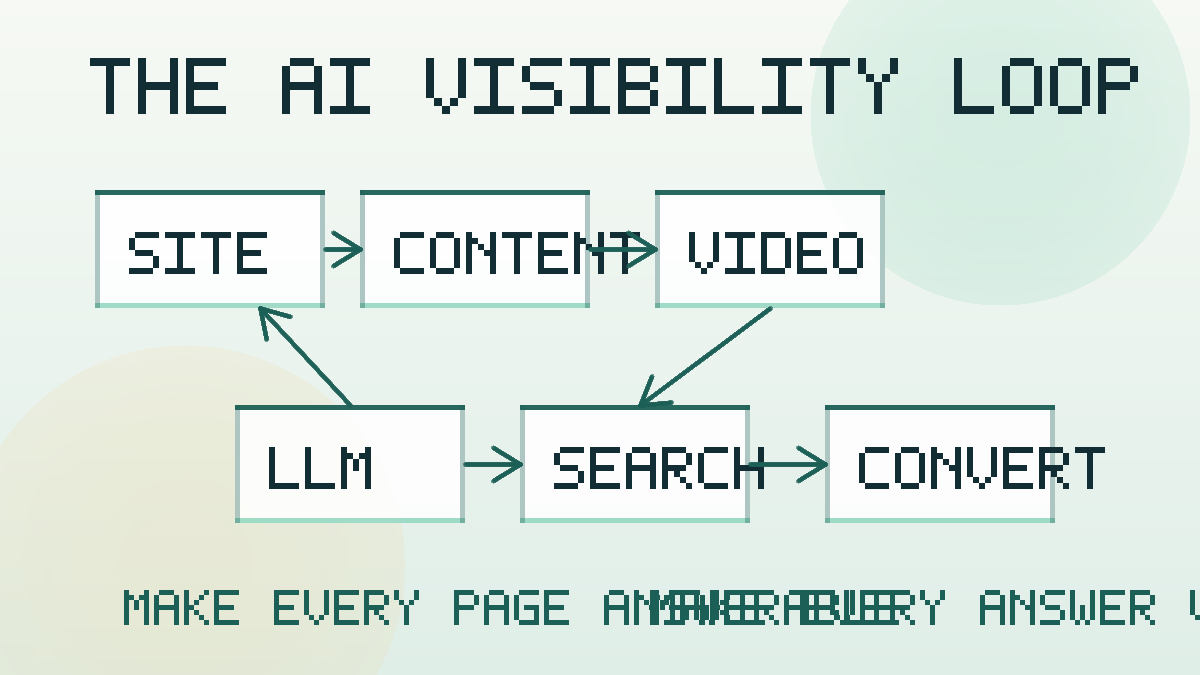
What we should do now
The AI world rewards content that is specific, useful, and reusable. For MarketAny, that points to five practical moves.
1. Build topic clusters around video marketing jobs
Instead of publishing random AI posts, we should build clusters around real jobs:
- Turn a landing page into a product video.
- Turn a blog post into a short social video.
- Turn a product launch into five campaign assets.
- Create captioned demos for SaaS features.
- Repurpose customer proof into video ads.
Each cluster should include one strong pillar guide, several workflow posts, comparison pages, and examples that show the output.
2. Write for humans first, then make the structure machine-readable
AI systems do not reward vague writing for long. The content should be genuinely useful for a founder, marketer, or creator. After that, structure helps: short sections, clear definitions, tables, step-by-step workflows, schema, media metadata, transcripts, and concise summaries.
A good rule: if a human can scan the article and understand the answer in 30 seconds, an AI system can probably parse it too.
3. Make video a first-class SEO asset
Most teams treat video as a final output. MarketAny should treat it as an SEO asset. Every important article can include a hero image, an embedded generated video, a poster image, captions, transcript text, and VideoObject structured data.
That gives search engines and AI systems more surface area to understand the page. It also matches how buyers learn now: they skim text, watch short clips, and ask AI to summarize the rest.
4. Create original examples, not generic advice
Generic AI content is becoming invisible. The articles that survive will include original workflows, screenshots, prompts, before-and-after examples, and concrete outputs. For MarketAny, that means showing real transformations: input website, generated script, resulting video, caption ideas, and distribution checklist.
5. Measure visibility beyond rankings
Rank tracking is not enough. We should also track whether MarketAny appears in AI answers, which pages are cited, which posts generate signups, and which content gets reused into videos, ads, and social posts.
Useful metrics include:
| Area | What to measure |
|---|---|
| SEO | Indexed pages, organic clicks, impressions, query coverage |
| GEO | AI mentions, citations, answer inclusion, brand co-occurrence |
| Content quality | Scroll depth, media engagement, return visits |
| Business impact | Signup rate, video generation starts, paid conversion |
The operating principle
The AI search era does not remove the need for content. It raises the bar. The winning strategy is to create pages that are helpful to people, legible to crawlers, and useful to answer engines.
For MarketAny, the simplest direction is this: make every important marketing problem answerable, visual, and actionable. If we do that consistently, SEO and GEO become the same motion: publish useful knowledge, package it clearly, and turn it into assets people can use.